“Let me demonstrate the ease at which to cut a five pointed star”
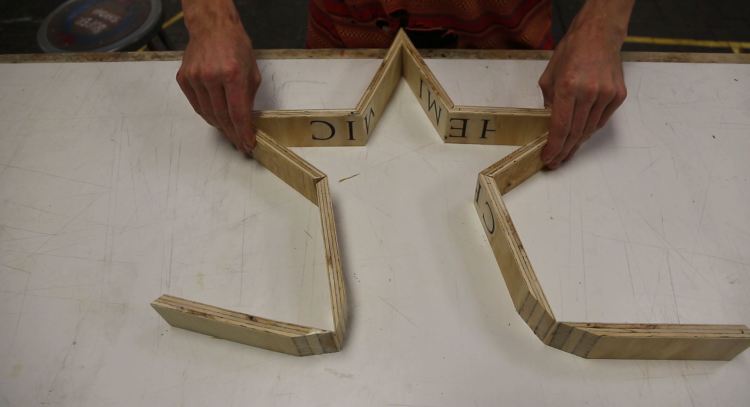
Betsy quickly picked up a scrap square of fabric and a large pair of well worn but meticulously maintained sheers. She folded the cloth one, two, three, four times, until an odd overlapping triangular bunch, now much smaller than the initial scrap, stayed pinched between her fingers. With a single deft cut Betsy sheared one side off, leaving a smaller, neater triangle in her hands. As each fold flattened out, the congressmen on either side leaned in closer. Finally, the last fold flopped open on its own accord, revealing a most perfect five pointed star.
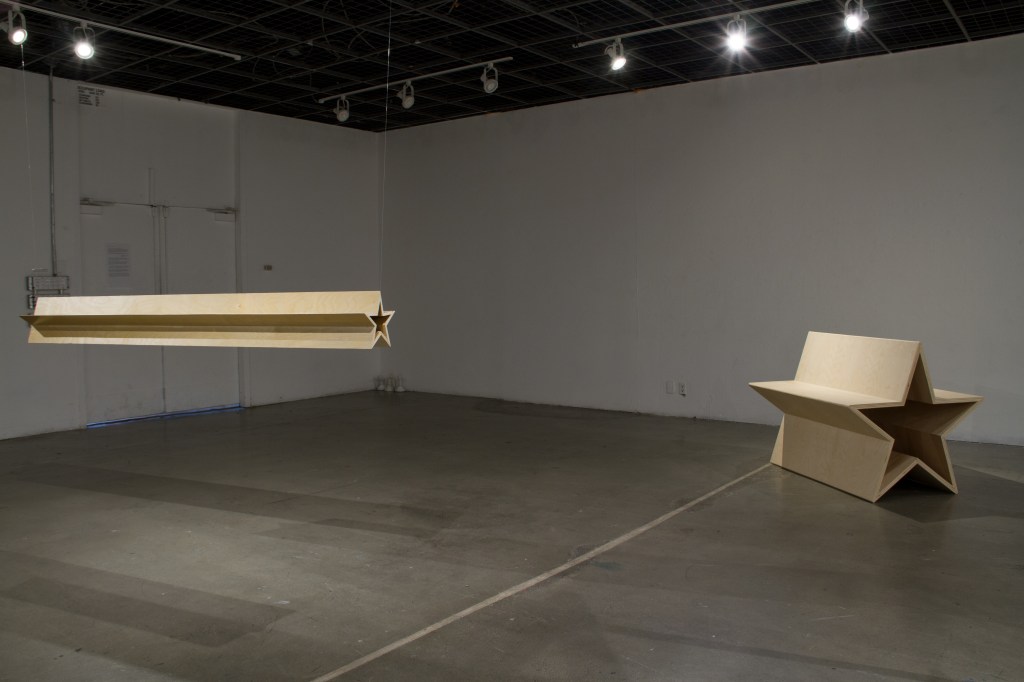
Plywood, Paste wax, Monofilament
“Yes! This will do, this is it. This is what we have been looking for” declared the men, who hastily returned to the Continental Congress to share this magnificent method of star formation.
-Myth of Betsy Ross and the crafting of the first American Flag.
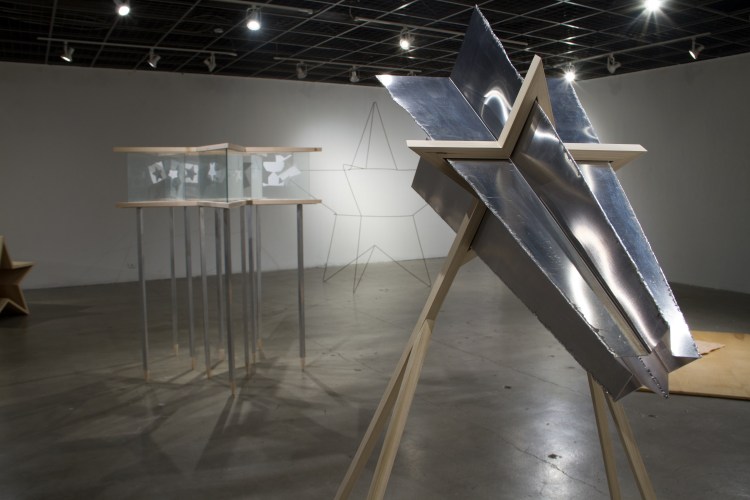
Aluminum, Poplar, Paste wax
The five pointed star has continually resurfaced in the slippery space between symbol and diagram; as a representation of the celestial order, a schematic of the essential elements of the human, a unifying representation of the thirteen colonies, a sign for achievement and advancement in the classroom or the battlefield.
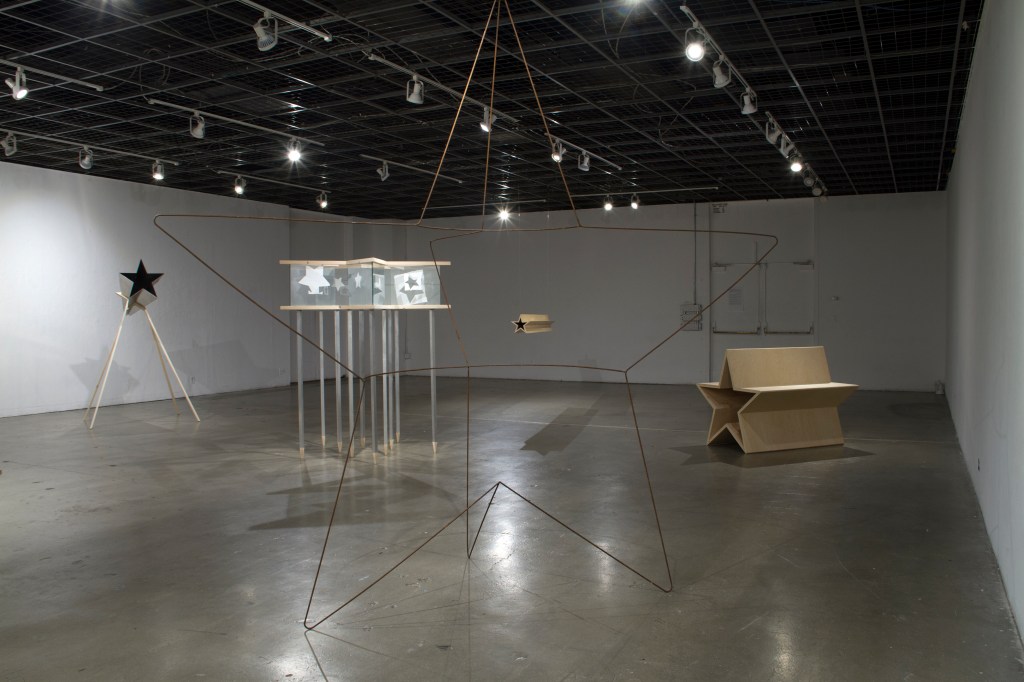
Steel
The star is made of uniform parts and can be subdivided into smaller stars of the same ratio. The most commonly used five pointed star is built with golden-ratio triangles. We find within the star geometry the logic of perfect scalability. But the translation of the orderliness of mathematical forms to the realm of the social and political rests on a broader belief in functionality of the form.
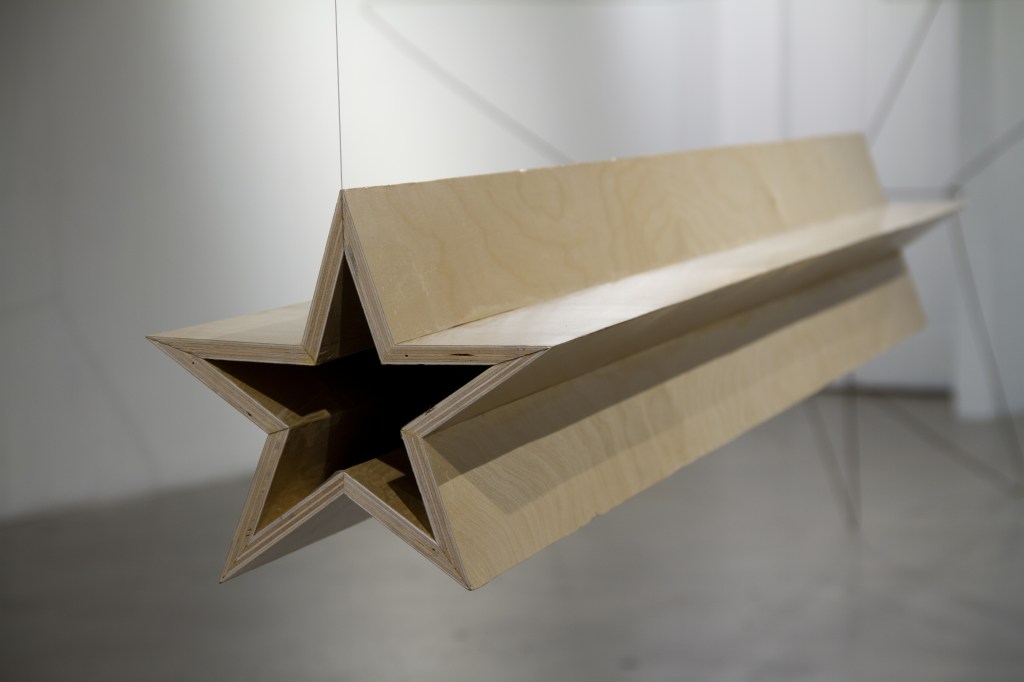
Plywood, Paste wax, Monofilament
Now that we have an orderly natural form, a geometry to structure our understandings of things, why not use it everywhere? The symbol becomes functional in every area we apply its form, from the symbolic realm to functional everyday objects. Our objects are now imbued with the essence of the symbol, since meaning and form have congealed into a uniform material.
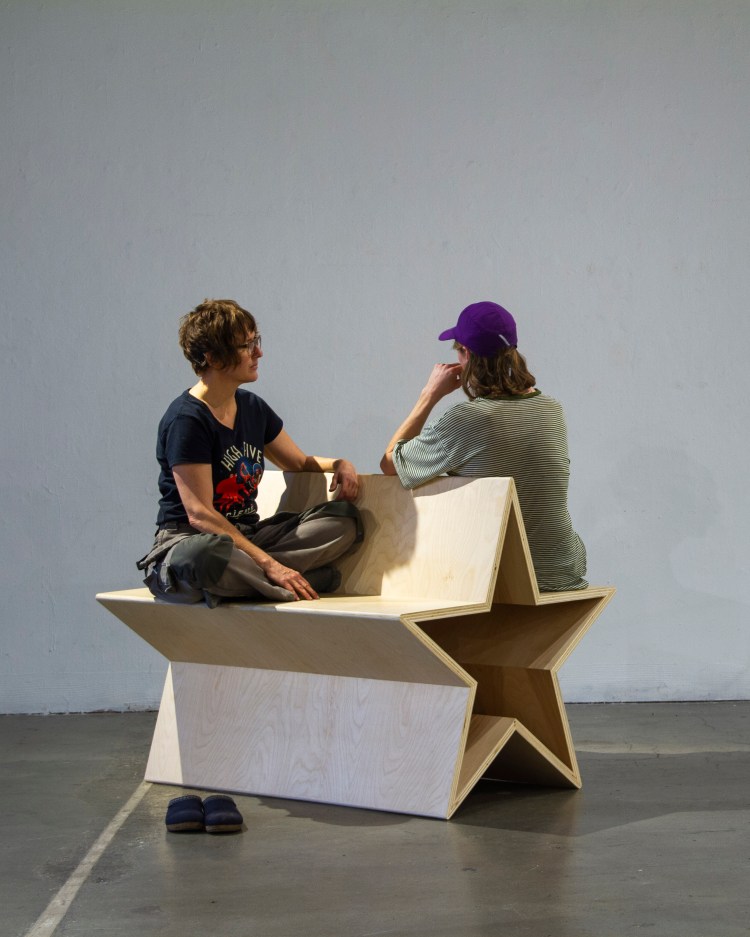
Plywood, Paste wax, Monofilament
When formal poetics become functional logistics, the experimentation and exploration of abstraction can become flattened into heavy handed law and order. A symbol and its form can easily collapse into each other, bonding meaning and structure. The inexhaustible possibilities of the form become closed when a meaning claims exclusivity.
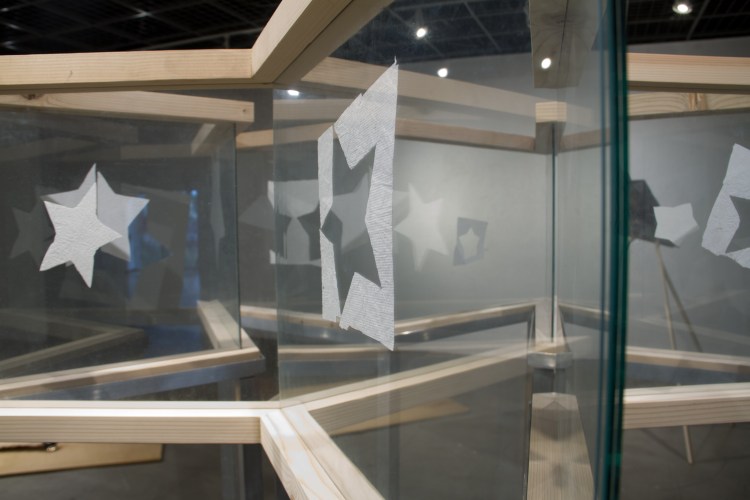
Glass, Pine, Aluminum, Tyvek
Simple geometries are especially seductive when it comes to this ossification of form and meaning. The ability to make a sensible argument based on a geometric form is aided by the comprehensibility of the shape. Equality, balance, symmetry, and separation all make sense in the abstract space. There is a place for these abstractions but the dangers of instrumentalizing poetics is always present. Abstraction becomes a praxis of resisting the alluring teleology of absolute craft while continuing the play of construction.
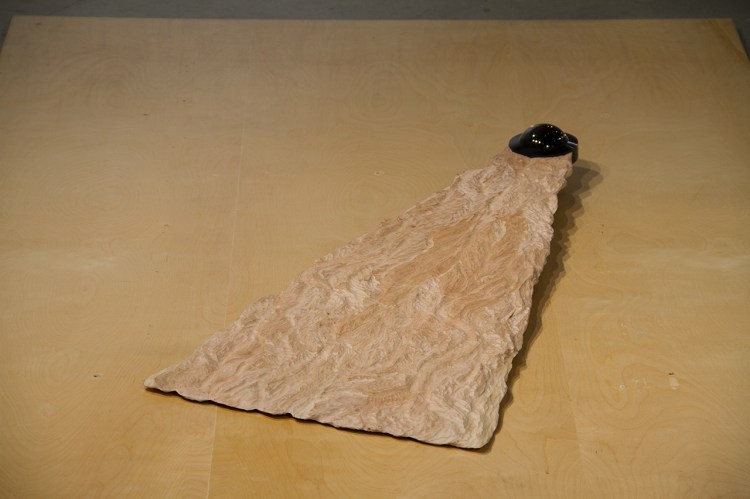
Glass, Delrin, Cherry, Plywood (dream and waking assistance from Alexandre Saden)
 Max Syron